This here is a Learning Plan Sample that you may use as inspiration for your own.
Learning plans (in Victoria) don’t need to be in any specific format so do as you please in terms of presenting it to the VQRA in your application.
Below is our eldest daughters submitted Learning Plan. It’s actually different to our second daughter’s learning plan, purely dues to the fact that we now know how we homeschool. Before one begins, they can only speculate and imagine. Living it, can look somewhat different.
Learning Plan 2024 – How it’s changed since 2020
Find our second Homeschooling Learning Plan (for registration) here.
This is a great example of how 2 plans can vary yet serve the same values!
What’s involved in registering?
Submitting a learning plan with identification along with your application (in Victoria). It’s that simple!
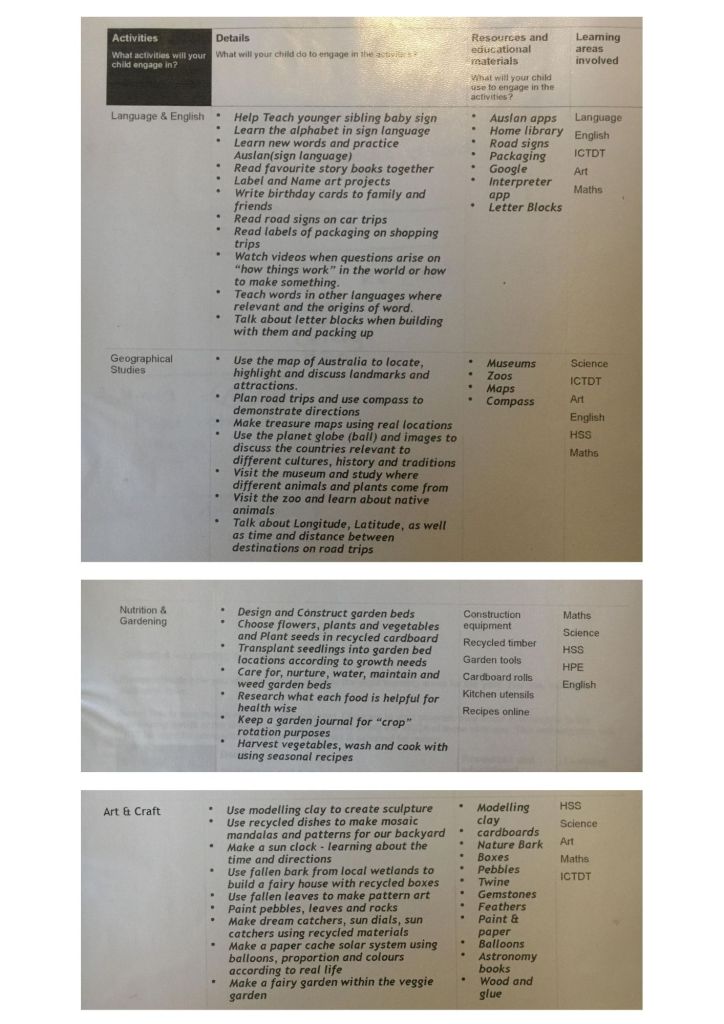
There are two types of learning plans. One subject based, more traditional school based, and the other, “activity” based, which is basically recognised as the “unschooling style”.
When submitting an activity based learning plan, you basically list how you are going to fulfil learning in all areas including:
• English
• Mathematics
• Sciences (including physics, chemistry and biology)
• Humanities and social sciences (including history, geography, economics, business, civics and citizenship)
• The arts
• Languages
• Health and physical education
• Information and communication technology and design and technology
As a homeschooler who opts for an activity based learning plan, you look at your life plan and how the activities you undertake “teach” or more so offer an opportunity to learn and demonstrate lessons in each of these areas.
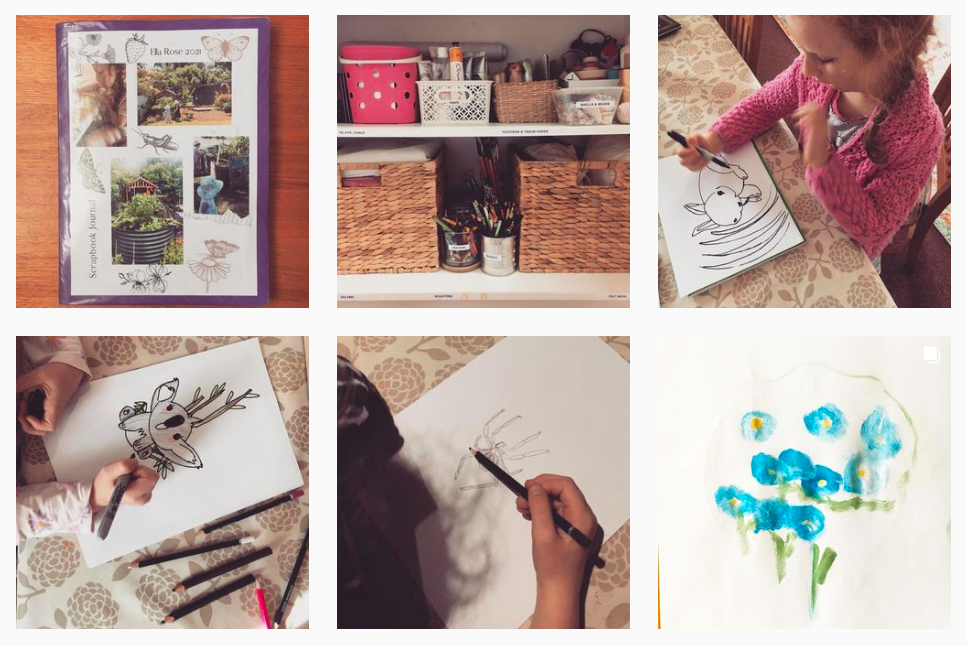
What I love about “home” education (and life) is…ONE single activity offers SO much learning…in fact, if you developed your skills in just one area of life…you will NEED to learn ALL of these things ANYWAY! Take ART for instance…you will need to plan your materials, budget for them (Mathematics), write or type up the list (English), buy them (Humanities and Social sciences/ Economics), perform or create the art, (Arts), Store the art electronically, file the art etc, (Information technology and design), learn the texture of different mediums on certain materials, (Science/Chemistry).
Does THIS not demonstrate the answer to that OLD question we homeschoolers KEEP getting… “What about Science and Maths?”
AGAIN, I was asked this just the other day! WHY? Why is it always the traditionally “boring” subjects people ask about? I can tell you! Traditionally in school environments…these subjects can be delivered in such a dry way…without must relevance to the here and now.
When you are USING the principle in real life…you learn it’s relevance and the lesson sticks! WHY? Because it’s not just plain old rote memorisation achieved temporarily in a stuffy environment where you can’t even more without asking! Sorry, I’m not sorry that I can’t contain my enthusiasm at times.
Nature Studies
• Keep a journal of our plant and animal studies: what is life, animal habitats
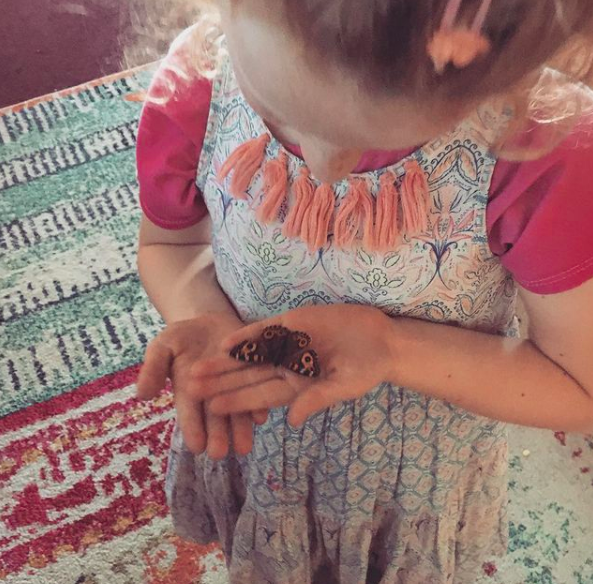
• Exploring the world around us and noting observations
• Follow the seasons and use seasonal stories to highlight the time of year
• Regular hikes through national parks, taking photographs of plants & animals species observed
• Researching plant and animal species
observed during hikes (online and in texts)
• Learning the Latin name of some plant and animal species – uses and characteristics
• Use nature for inspiration in art and craft (Scrap booking)
• Spend time playing in parks outdoors, rock climbing, making sandcastles, swimming, trampolining in back yard
Resources
In just ONE activity, you can use countless resources that are not found within the confines of a class room. Each activity must list the resources within the learning plan that you intend on using with your children. Here is the examples I have included JUST for Nature Studies.
• Montessori botany materials
• Life cycle materials
• Zoo
• Local wetlands
• Explore Parks Vic app
• Scrap book journal
• Outdoors / parks
• Swimming pool
Learning Areas
The learning areas covered by just this one activity are:
Sciences
The Arts
HPE
English
HSS
ICDT/Information and communication technology and design and technology
Languages
What’s not to love about this freedom!
Environment

• Follow the seasons and discuss the role
each one has in nature
• Visit family friends Paper mill to learn
about recycling paper and environmental
impact of it’s production
• Minimise household packaging, using
local refills and bulk shopping
(measuring / using metrics and weight
for refill containers) – using / recycling
packaging for art projects
• Visit the museum and learn about animal
habitats
• Continue learning about the solar system
and constellations
• Read labels of household products for
information on ingredients relevant to
their impact on health and environment
Resources
• Story books on the seasons
• Koala Resources
• Scales
• Recycled packages
• Melbourne Museum
• Telescope
• Astronomy apps and books
Learning areas
Science
HSS
HPE
Art
ICTDT – Paper mill
Maths – refill measuring
See the rest of our learning plan here
For Guidance on Learning Plans from the Home Education Network, click here.
I emailed my own Learning Plan to them prior to submitting it and received helpful tips on where I could elaborate. I encourage parents (applicants) to do the same as I found this such a lovely opportunity to gain feedback from experienced homeschool advocates (parents).
 Holistic Home Education